
The end of the Healthy Opportunities Pilot (HOP) in North Carolina is a story of how MAHA might actually be realized — or not — at the state level.
In early 2023, Rebecca Smith was two months sober and looking for help. Her addiction to methamphetamines had cost her custody of her children, and she’d moved back home to Graham County, North Carolina, to rebuild her life. High cholesterol and heart problems ran in her family, and during her struggle with addiction she had been diagnosed with diabetes. She knew that staying sober would require taking better care of herself.
She discovered Five Point Center, a nonprofit in her tiny, Great Smoky Mountains town that offered recovery support as well as free meals and groceries. Workers there told her about a new Medicaid program, the Healthy Opportunities Pilot, that would deliver boxes of fresh food to her home for free every week.
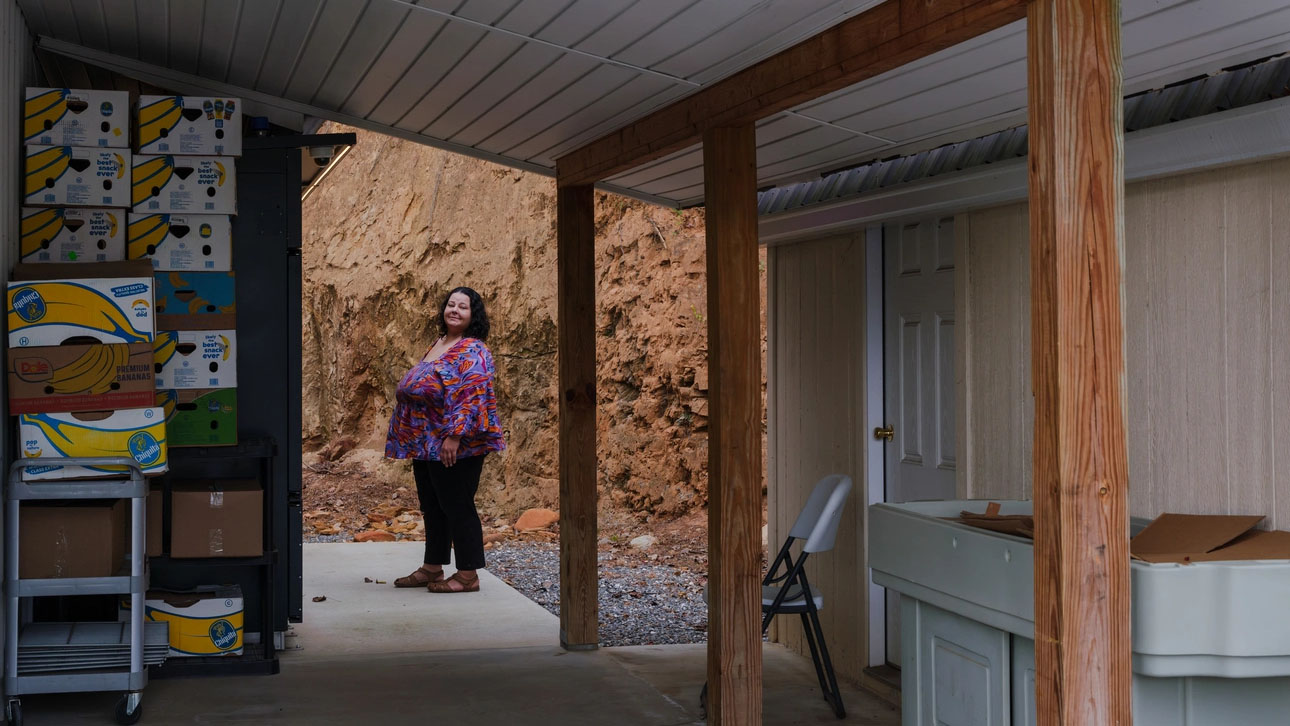
>Soon Smith, 35, was snacking on grapes instead of chips. She tried mangoes for the first time, and prepared Southwest chicken from a recipe that came with her box. She learned to stretch her food budget so she didn’t need to apply for the Supplemental Nutrition Assistance Program and even got a job helping to pack the HOP boxes every week. “It was easy to prepare the things that came in the HOP boxes, instead of going through a drive-through,” Smith said.
After a few months in the program, Smith was no longer diabetic, and she has now been sober for two and a half years.
Her story highlights the success of the Healthy Opportunities Pilot, which launched in North Carolina in March 2022. The program had benefits beyond health and quality-of-life improvements; researchers at UNC-Chapel Hill found the program saved $1,020 a year per recipient on health care costs, and the 38,000 participants had “significantly lower” emergency room visits than their peers.
The program was unique, funded with a five-year, $650 million federal grant approved by the first Donald Trump administration. The idea was to use fresh food, safe housing and transportation — social and economic factors that researchers say determine 80 percent of a person’s health — to improve the lives of the sickest, most expensive patients.
Researchers also note that many economic benefits — such as money saved on groceries that families can now spend on rent, or parents not missing work to stay home with their sick kids — don’t show up in the Medicaid budget. “The services are being paid through Medicaid,” said Rebecca Whitaker, research director at the Duke-Margolis Institute for Health Policy. “But there’s this broader sphere of impact … and that’s hard to track.”
For Republican legislators in North Carolina, neither the calculations from these studies nor such unquantifiable benefits were enough to convince them to save the program.
But in Washington, enthusiasm for programs like HOP appears to be waning. In March, the Centers for Medicare & Medicaid Services, which HHS oversees, removed federal guidance encouraging states to apply for the kind of Medicaid waivers that allowed states flexibility in how they used federal money and, as in the case of HOP, allowed them to use it to provide nutritious food for low-income families.
Instead, the Trump administration has been talking about “MAHA boxes” filled with farmer-grown food. The MAHA commission’s strategy report, released in September, included a single sentence about these boxes: “USDA will develop options to get whole, healthy food to SNAP participants.” It does not say how such boxes would be funded or distributed.
11/08/2025